



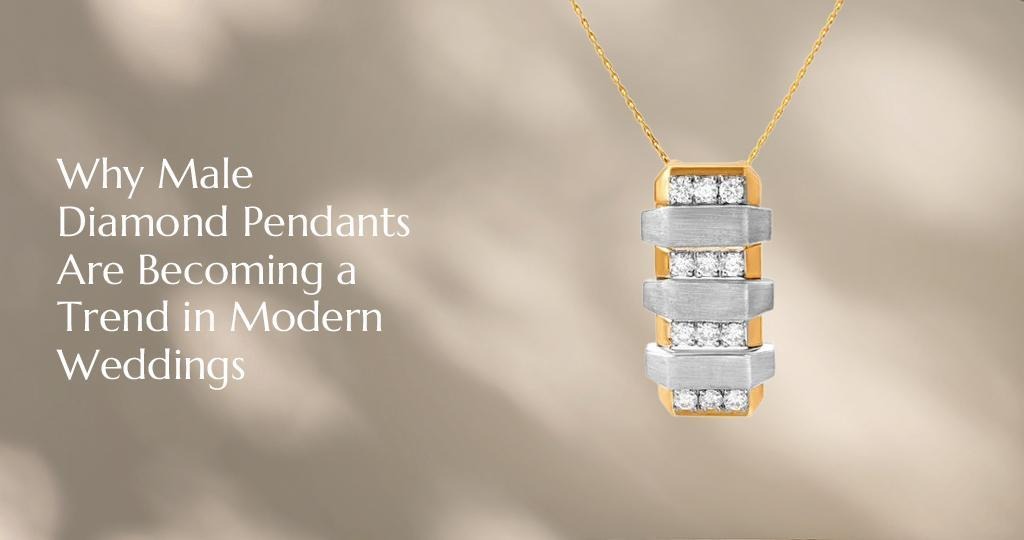
A male diamond pendant sits neatly between tradition and today’s clean, tailored groom style. In Indian weddings, it adds polish without fuss, pairs with sherwanis and suits, and carries meaning that feels personal. This article stays focused on why interest is rising and how grooms use this accessory across the wedding week and beyond.
Differences Between Pendant, Locket, and Necklace –
Male diamond pendants are gaining popularity for their sleek, contemporary appeal in modern weddings. Unlike lockets, which hold personal keepsakes, or traditional necklaces, pendants focus on showcasing a single statement piece, making them a stylish and versatile accessory for men.
Fits Today’s Groom Aesthetic
Modern groom styling leans towards sharp silhouettes and light, purposeful jewellery. A pendant delivers focused shine near the collarbone, keeping the look tidy around embroidered collars and structured jackets. Men’s diamond pendants work as a single, visible accent rather than a layered cluster, which supports neat tailoring and streamlined outfits.
Sits Well With Indian Wedding Outfits
The same piece can move through different dress codes without looking out of place. It rests above a kurta neckline, clears sherwani collars, and sits comfortably under a bandhgala or reception blazer. Because the pendant is compact, it does not compete with zari, resham, or button detailing; it complements them.
Balances Tradition and Contemporary Taste
Indian weddings celebrate heritage while welcoming modern cuts and fabrics. A pendant respects rituals yet feels current with minimal lines and refined finishes. Traditional touches remain intact, but the overall effect stays light. This balance helps the accessory feel appropriate at the blessings and stylish at the reception.
Carries Personal Meaning Without Bulk
Grooms often prefer symbolism that is clear and close to the heart, not heavy or ornate. A diamond Om pendant offers a devotional note in a compact form, working with silk kurtas and tailored jackets alike. Personal initials, family motifs, or clean shapes add quiet identity while keeping the neckline uncluttered.
Photographs Cleanly Across Venues
Albums, films, and reels highlight details near the face. A pendant frames that area neatly, registering under warm mandap lights and cooler outdoor settings. Smooth backs help it lie flat for close-ups, and balanced sparkle reads well on camera without drawing attention away from attire or ritual moments.
Supports Comfort During Long Ceremonies
Comfort matters through greetings, rituals, and dance. Rounded edges prevent snagging on embroidered collars or stoles. Even weight keeps the pendant centred while walking. A sensible chain thickness and reliable clasp reduce fuss during crowded entries and exits. When the piece feels good, posture stays natural and confident.
Works With Family Gifting Traditions
Families often mark milestones with jewellery. A pendant suits this practice because it is visible, meaningful, and easy to wear later. It can reflect family values through symbolic outlines or heritage-inspired patterns while remaining compact and practical for the groom’s schedule across events.
Aligns With Minimal Wardrobe Planning
A single accessory that works for multiple looks eases planning. One pendant can connect outfits across functions, reducing the need for separate pieces for each event. Matching the metal tone to the groom’s primary colour palette, warm creams and maroons or cooler ivories and blues, helps every change of outfit stay cohesive.
Supports Faith and Identity in a Subtle Way
Meaningful symbols remain central to Indian weddings. A compact, well-finished diamond pendant gives that significance a modern outline while staying respectful across rituals. The scale keeps devotion close and personal, allowing the pendant to blend into formal wear instead of sitting apart from it.
Stays Relevant After the Wedding
Re-wear keeps the piece valuable over time. A pendant that suits kurtas, casual shirts, and blazers becomes part of regular life, festivals, family dinners, and open-collar work events. This day-to-day compatibility encourages grooms to choose designs that are simple, balanced, and not tied only to one ceremony.
Pairs Smoothly With Groom Accessories
Safas, kalgis, buttons, studs, and cufflinks already create points of interest. A pendant adds one more, close to the face, without creating clutter. Coordinating finishes, white, yellow, or rose tones, with existing metal accents helps the whole look feel intentional rather than matched piece by piece.
Keeps the Focus on the Silhouette
Clean necklines are central to modern tailoring. A pendant frames that area without interrupting it. Slim chains and proportionate drops avoid crowding the chest, letting the sherwani placket or bandhgala buttons remain the visual guide while the pendant provides a measured highlight.
Conclusion
Interest in the male diamond pendant grows because it meets the groom’s core requirements: respectful at rituals, refined with tailoring, easy to plan around, and wearable after the celebrations. Whether you choose a diamond Om pendant, a minimal single-stone look, or a clean geometric design, the result is the same. It becomes an understated signature for modern Indian weddings and remains useful long after the final farewell.